
 Log in
No time, experience, or expertise? No problem.
Invest with confidence.
Let our models guide your portfolio through changing markets.
Recommended Articles

September 10, 2025
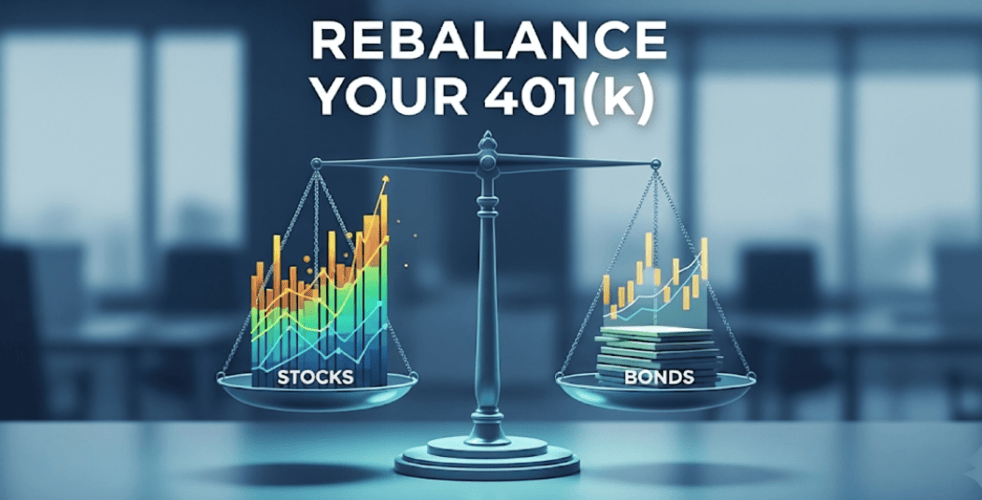
How to Rebalance Your 401(k): Smart Strategies for Growth & Safety
September 4, 2025
Strategic Vs. Tactical Investing: Key Differences & Your Best FitReady to raise your investing IQ?
Sign up for our Free Newsletter to access the best investment information money can’t buy.

Published On: September 4, 2025
Last Updated: February 10, 2026
When it comes to growing and protecting your money, how you invest can be just as important as what you invest in.
For most people, investment decisions start with one big choice: Should I set my portfolio and leave it alone, or actively adjust it based on market conditions?
That’s the main point of the Strategic vs. Tactical Investing debate.
If you’ve ever been told to “just hold your investments and ride out
When it comes to growing and protecting your money, how you invest can be just as important as what you invest in.
For most people, investment decisions start with one big choice: Should I set my portfolio and leave it alone, or actively adjust it based on market conditions?
That’s the main point of the Strategic vs. Tactical Investing debate.
If you’ve ever been told to “just hold your investments and ride out the market,” you’ve heard the strategic investing philosophy.
If you’ve heard advice like “move into safer assets when markets look risky,” that’s the tactical side talking.
Both have their merits, but here’s the truth:
In this guide, we’ll break down strategic vs. tactical investing in very simple terms — no jargon, no intimidating charts.
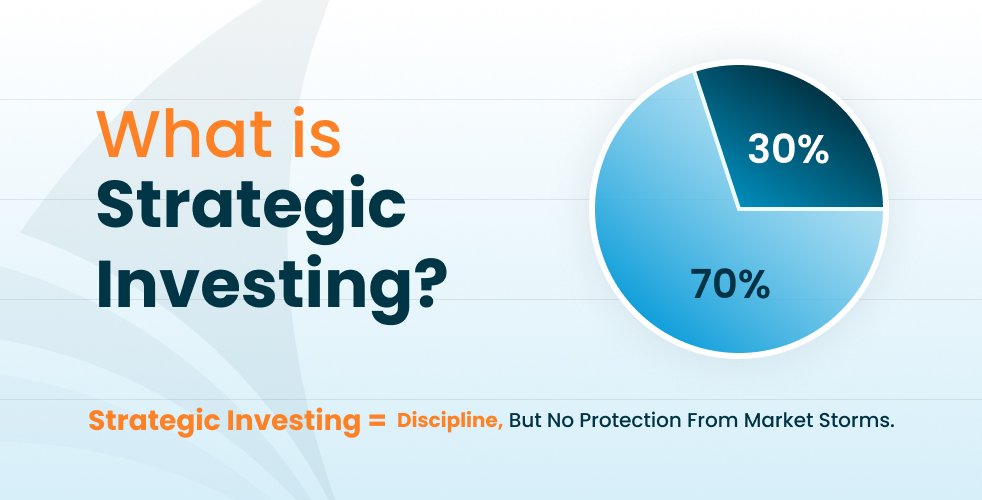
Strategic investing is like setting your GPS before a road trip and then never changing the route — no matter what traffic or weather you run into.
In the investing world, this approach is called strategic asset allocation. You decide on a target mix of investments — for example:
… and you keep that mix steady over the long term.
You might adjust slightly if your life changes (like nearing retirement), but you don’t change your allocation based on what the market is doing day-to-day or even year-to-year.
While the “stay the course” approach works for some, it has major limitations:
Imagine your portfolio is 70% in stocks when a major market crash hits. If stocks drop 50%, your portfolio instantly takes a 35% hit. With strategic investing, you don’t change course — you just wait for the recovery, which might take years.
That’s where tactical investing takes a different path — one we’ll explore next.
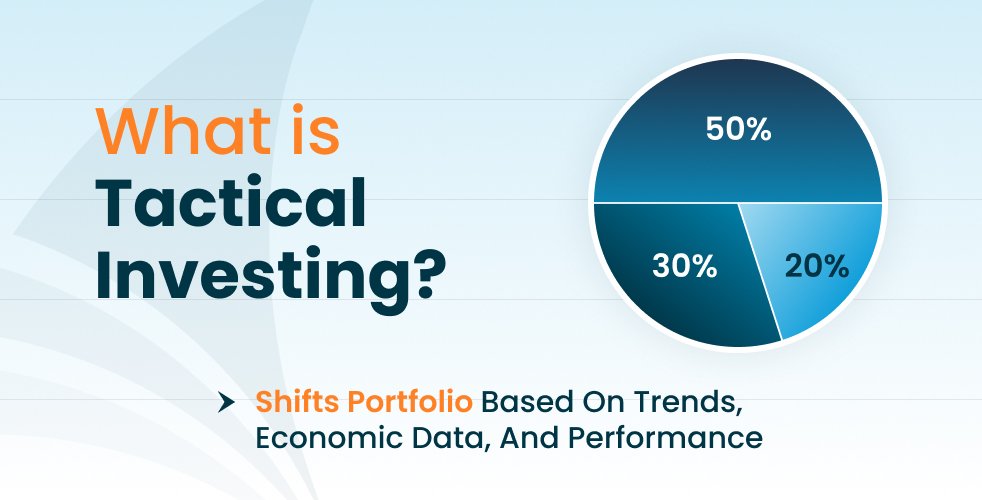
If strategic investing is like setting your GPS and sticking to the route no matter what, tactical investing is like checking the traffic and weather along the way — and taking a different route if it’ll get you there faster and safer.
In investing terms, this approach is called tactical asset allocation. Instead of locking into one fixed portfolio mix, you adjust your investments based on:
Tactical investing shifts portfolio weights proactively. For example:
This isn’t day trading; it’s active investing with a focus on risk management, making changes a few times a year or as conditions shift.
Let’s say your research shows signs of a recession in the next few months. With tactical investing, you could lower stock exposure early, increase cash or bonds, and avoid the full brunt of a crash — then re-enter stocks when conditions improve.
Let our models guide your portfolio through changing markets.
By now, you’ve seen that strategic asset allocation and tactical asset allocation take very different routes toward the same goal: growing and protecting your wealth.
The big question is — which one fits you better?
Here’s a side-by-side breakdown:
| Aspect | Strategic Investing | Tactical Investing |
|---|---|---|
| Portfolio Allocation Strategy | Fixed allocation to asset classes (e.g., 60% stocks, 40% bonds), adjusted only as life stage changes | Flexible allocation that shifts based on market conditions and opportunities |
| Approach | Passive — stick to the plan regardless of market changes | Active — adapt portfolio when trends or risks emerge |
| Market Awareness | Ignores short-term conditions, focuses on long-term averages | Considers economic data, performance trends, and potential market shifts |
| Risk Management | Relies on diversification and long time horizons to weather downturns | Uses allocation changes to reduce downside and capture upside |
| Effort & Involvement | Low — minimal monitoring needed | Medium — requires periodic evaluation and decision-making |
| Potential Performance | Steady, but may miss out on gains or suffer during prolonged downturns | Can outperform in volatile markets if timing and strategy are sound |
Both have their merits, and both can be executed well — but their outcomes can look very different depending on the market environment.
Think of it like running a marathon:
Tactical investing can give you an edge, but knowing when to speed up or slow down takes skill. Our proven, quantitative models act like your investment coach, guiding you through market hills and valleys so you can finish strong.
Let our tactical models guide the pace.
Whether you lean toward strategic asset allocation or tactical asset allocation, there are pitfalls that can quietly chip away at your returns, and even your confidence.
Let’s go through the big ones so you can sidestep them from the start.
Did you know?
The best investors aren’t the ones who make the perfect move every time. They’re the ones who avoid the biggest mistakes. By knowing these traps, you’re already ahead of most people.
When it comes to retirement accounts like your 401(k), TSP, or IRA, the stakes are higher. These accounts often hold decades of your hard-earned savings, and the way you manage them can make the difference between retiring comfortably or having to delay your plans.
The challenge? Many retirement accounts default to strategic asset allocation through target-date funds or static mixes. That means your investments shift gradually from stocks to bonds as you age, regardless of what’s happening in the market.
Side Note: If the thought of market drops makes you uneasy, you might be surprised to learn that they can actually benefit long-term investors. Check out our article on Why You Should Look Forward to Market Declines.
Retirement accounts are tax-advantaged, which means fewer penalties for rebalancing compared to taxable accounts. This makes them perfect for tactical asset allocation, where adjustments happen more often.
Pro Tip: Even if your employer’s plan defaults to a target date fund, you can still manually adjust allocations. Understanding the basics of both approaches helps you make smarter decisions and potentially retire earlier with more money.
Market volatility isn’t just “noise.” It can have a lasting impact on your portfolio, especially if you’re near retirement or relying on your investments for income. While strategic asset allocation assumes you’ll ride out the ups and downs, tactical asset allocation aims to respond to them.
A strategic approach keeps you invested in certain percentages of stocks, bonds, and other assets no matter what the market is doing.
Tactical investing is like steering a ship — you adjust your sails when the wind changes, rather than locking them in place.
This “flex and adapt” method can help you avoid the worst of market crashes while capturing more upside when conditions improve.
Connect with our team for clear, data-driven guidance.
When it comes to Strategic vs. Tactical Investing, many think they must choose one and commit to it for life. At Model Investing, we believe you shouldn’t have to choose, and you don’t.
Our approach is 100% tactical, but it’s built to capture the best qualities of both styles. You get the discipline and structure of strategic investing combined with the adaptability and responsiveness of tactical investing, all in one proven, rules-based system.
Just like strategic investing, our models follow a disciplined, rules-based framework for portfolio construction. We use sound portfolio allocation strategies to ensure diversification and long-term alignment with your goals.
Unlike fixed strategic allocations, our tactical models adapt to market shifts, economic indicators, and asset performance. This means we can sidestep major downturns, reduce risk during turbulent times, and stay positioned for growth when markets recover.
With Model Investing, you get tactical investing that’s steady when it counts and agile when it matters most, helping you aim for market-beating returns while keeping risk under control, no matter what the market throws at you.
Designed to limit major drawdowns and support steady compounding.

If you want to explore proven, rules-based tactical strategies that adapt to market conditions, take a look at our investment models. They’re designed to help you:
The Model Investing Research Team, led by Chief Investment Strategist Matthew Kerkhoff, is a group of finance professionals, data scientists, and software engineers committed to helping individuals make smarter investment decisions. By combining advanced analytics, behavioral science, and market expertise, they simplify complex financial concepts and deliver clear, actionable insights. Their mission is to empower investors of all levels with the knowledge and tools needed to achieve financial stability and long-term success.
Read More
An innovative approach for eaming higher returns with less risk
Download Report (1.2M PDF)You don’t want to look back and know you could’ve done better.
See PricingPosted in